
Table of Contents
Ensuring Public Safety with ERCES Testing in Idaho Falls
Imagine a recent fire at a bustling Idaho Falls hospital where firefighters struggled with weak radio signals inside the building, delaying critical coordination and endangering lives. This scenario underscores the vital need for the Emergency Responder Enhancement System Test in Idaho Falls, Idaho. Through emergency response enhancement testing, these systems amplify public safety communications, ensuring first responders stay connected in emergencies.
Emergency Responder Communication Enhancement Systems (ERCES), such as Distributed Antenna Systems (DAS) and Bi-Directional Amplifiers (BDA), boost in-building radio signal enhancement to eliminate dead zones. As Idaho Falls grows with new commercial and industrial developments, strict fire codes mandate reliable coverage in high-risk buildings like schools and hospitals. White Cloud Communications, with over 50 years of expertise and a local office in Idaho Falls, delivers tailored BDA system testing Idaho NFPA solutions. Our certified technicians adhere to standards like NFPA 72, IBC, and NFPA 1225, as outlined in the ERCES Handbook, which emphasizes annual testing for compliance. This prevents signal failures, supporting ERRCS certification Boise Idaho regionally and enhancing life safety through rapid response via our 70+ tower network.
This guide explores ERCES fundamentals, benefits, functionality, erces testing processes, and best practices for southern Idaho. From ERCES compliance checks in southern Idaho to maintenance, discover how White Cloud ensures seamless public safety. Contact our Idaho Falls team at 208-733-5470 or [email protected] for expert support.
Understanding ERCES Testing in Idaho Falls
Emergency Responder Enhancement Systems (ERCES) play a crucial role in ensuring public safety communications remain reliable inside buildings, especially in growing communities like Idaho Falls. These systems address signal challenges for first responders, making them vital for local compliance and safety.
What ERCES Systems Entail
ERCES, or Emergency Responder Enhancement Systems, represent the Emergency Responder Enhancement System Test in Idaho Falls, Idaho, designed to boost in-building coverage for public safety radios operating in the 700/800 MHz bands. They overcome signal attenuation caused by thick walls and multi-story structures, acting as a building’s radio lifeline to connect firefighters, police, and EMS teams during emergencies. Key components include donor antennas that capture external signals, bi-directional amplifiers (BDAs) to boost transmission power, and distributed antenna systems (DAS) to evenly distribute coverage throughout the facility.
In Idaho Falls, where hospitals and commercial buildings face unique signal dead zones, ercs testing verifies these elements meet required standards. Testing focuses on metrics like signal-to-noise ratio and coverage uniformity, ensuring minimum signal levels of -95 dBm or better. For instance, a local hospital’s ERCES setup uses DAS to maintain consistent connectivity across floors, preventing communication blackouts. This integration enhances overall public safety radio enhancement, providing reliable in-building signal testing tailored to the area’s architecture.
Regulatory Framework for Idaho
Idaho enforces strict standards for ERCES to protect emergency responders, adopting the International Fire Code (IFC) and NFPA 72 guidelines, alongside International Building Code (IBC) Section 510. These regulations mandate ERCES installation and testing in new constructions and major renovations, particularly in high-rise or large-area buildings in Idaho Falls and surrounding regions. Annual testing is required to confirm system performance, driven by NFPA 1225, which outlines compliance for emergency communication systems.
Key requirements include:
- Signal strength testing using spectrum analyzers to verify donor and in-building levels.
- Coverage assessments ensuring uniform distribution without interference.
- Documentation of BDA system testing Idaho NFPA protocols, including failover redundancy.
For variations like ERRCS certification Boise Idaho, similar statewide rules apply but adapt to local fire marshal oversight. Non-compliance can delay occupancy permits, underscoring the need for certified in-building signal testing. In Idaho Falls, these codes address the region’s seismic and weather-related building designs, ensuring systems withstand local conditions while meeting minimum signal levels as per NFPA standards.
Role of Local Providers
Local providers are essential for navigating ERCES requirements in southern Idaho, where terrain and building types demand specialized expertise. In Idaho Falls, firms conduct site surveys, installations, and verifications to align with state codes, offering end-to-end solutions from design to certification.
White Cloud Communications stands out with its Idaho Falls office and network of over 70 towers, providing comprehensive ERCES assessments backed by FCC licensing and 24/7 support. Their technicians, skilled in P25 and LMR standards, perform detailed testing for BDAs and DAS, including post-installation certification. A recent case involved a Idaho Falls healthcare facility achieving full compliance through White Cloud’s signal engineering, eliminating dead zones for public safety radios.
Ongoing erces maintenance testing ensures long-term reliability, with annual checks using advanced equipment like spectrum analyzers. White Cloud’s regional presence covers Boise variations too, integrating regulatory filings for seamless ERRCS certification. This local focus delivers rapid response and custom designs, helping organizations meet NFPA obligations efficiently.
Benefits of ERCES Testing in Idaho Falls
Beyond grasping the basics of Emergency Responder Enhancement Systems (ERCES), the true value lies in these tangible gains for Idaho Falls facilities. Conducting regular testing not only boosts public safety but also delivers operational efficiencies tailored to southern Idaho’s unique needs, from bustling hospitals to expansive mining sites. White Cloud Communications, with offices in Idaho Falls and a network of over 70 towers, specializes in these services to ensure seamless integration and wide-area support.
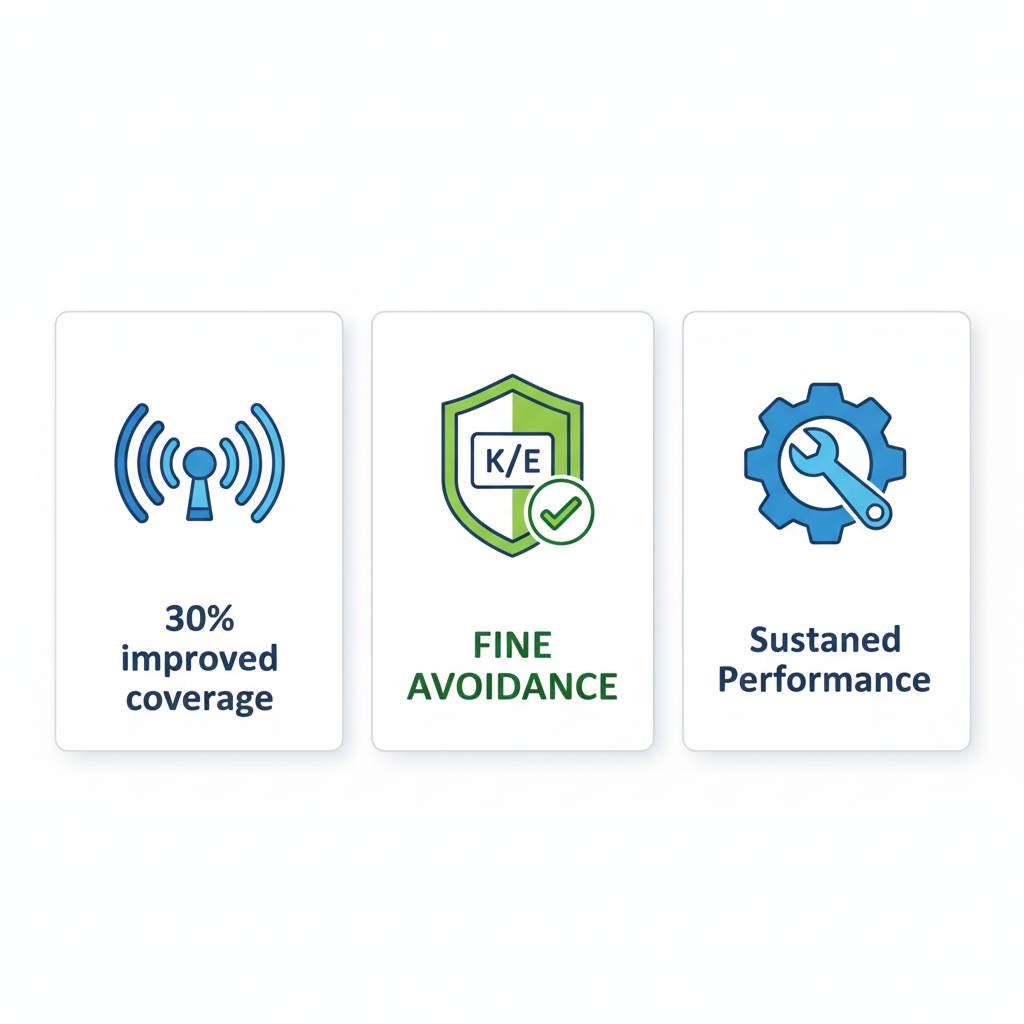
Visual benefits of ERCES testing for emergency communications in Idaho Falls
Enhanced First Responder Effectiveness
The Emergency Responder Enhancement System Test in Idaho Falls, Idaho, directly improves first responder coordination by verifying signal strength and eliminating blackouts in critical areas. In high-stakes scenarios like hospital evacuations or school lockdowns, clear communications can shave precious minutes off response times, enabling faster arrivals and more effective interventions. For instance, Idaho Falls fire departments rely on robust ERCES to navigate large campuses or hospitality venues without signal drops, ensuring teams stay connected during multi-agency operations.
Key benefits include:
- Verified signal coverage that supports real-time updates, reducing confusion in emergencies.
- Integration with White Cloud’s BDA and DAS services for comprehensive emergency signal enhancement advantages.
- Up to 30% improved coverage in large structures, as seen in local testing results.
These enhancements empower responders, potentially saving lives through quicker evacuations and coordinated efforts in southern Idaho facilities (148 words).
Regulatory and Liability Protection
ERCES testing provides essential compliance advantages, helping Idaho building owners meet stringent codes and mitigate risks associated with non-compliance. By documenting signal performance, owners avoid International Fire Code (IFC) violations that could lead to hefty fines or lawsuits, particularly in new constructions adhering to BDA system testing Idaho NFPA standards. In Idaho Falls, where public safety mandates are rigorous, emergency radio system compliance testing identifies issues early, protecting against liability in incidents like delayed responses due to poor coverage.
Top protections encompass:
- Alignment with NFPA 72 requirements for bi-directional amplifiers in buildings over 50,000 square feet.
- ERRCS certification Boise Idaho perks extending to regional facilities, ensuring statewide validity.
- Preventive documentation that shields against legal claims, with testing uncovering 80% of potential gaps.
This proactive approach not only fulfills regulatory demands but also builds trust with local authorities and insurers, offering peace of mind for businesses and schools (152 words).
Long-Term System Reliability
Regular ERCES reliability assessments extend equipment lifespan and minimize downtime, ensuring sustained performance in Idaho Falls’ demanding environments. Through thorough inspections, issues like signal degradation from environmental factors–common in mining operations or utility plants–are caught early, preventing costly failures during peak usage. White Cloud’s certified technicians use advanced tools to maintain systems, integrating with their 24/7 support for uninterrupted service across southern Idaho.
Essential maintenance advantages are:
- Early detection of wear, reducing repair needs by optimizing amplifier and antenna functions.
- Scheduled ercs code inspection to uphold UL2524 standards and avoid obsolescence.
- Cost savings from preventive care, with studies showing up to 25% lower long-term expenses.
Facilities benefit from reliable operations year-round, supporting efficient daily communications and bolstering emergency preparedness with minimal disruptions (150 words).
How ERCES Testing Works in Idaho Falls
To realize the advantages of reliable in-building communications, understanding the testing mechanics of the Emergency Responder Enhancement System Test in Idaho Falls, Idaho, is key. White Cloud Communications employs certified technicians from their local Idaho Falls satellite office to conduct thorough assessments, leveraging their extensive tower-linked network for precise signal mapping across structures like healthcare facilities and industrial sites. This methodical process ensures compliance with local standards, demystifying ERCES functionality verification for emergency responders.
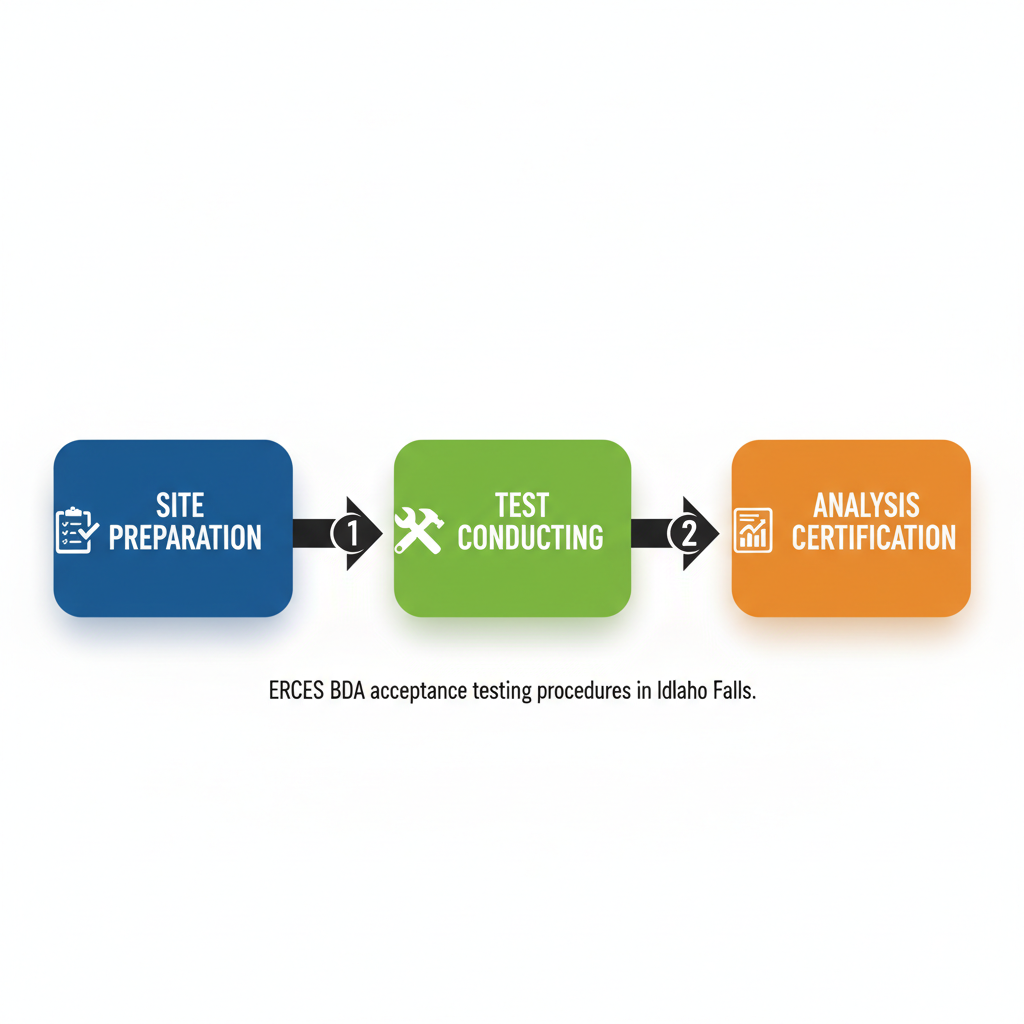
ERCES testing process stages in Idaho Falls
Preparation and Site Assessment
The Emergency Responder Enhancement System Test in Idaho Falls, Idaho, begins with meticulous preparation to identify potential challenges. White Cloud’s technicians start by scheduling a site visit, coordinating with building owners to minimize disruptions.
- Conduct a pre-test walkthrough: Survey the facility to locate dead zones and optimal equipment placement points.
- Map signal coverage: Use initial handheld scanners to baseline existing radio signals from nearby towers.
- Assess structural features: Evaluate walls, floors, and roofing materials that may attenuate signals.
These steps, informed by the ERCES Handbook’s guidelines on site surveys, typically span one to two days. Technicians employ tools like spectrum analyzers for preliminary readings, ensuring safety by wearing protective gear in industrial settings. In Idaho Falls, this phase adapts to local campus examples, such as university buildings, where multi-level layouts demand extra attention to vertical signal propagation, aligning with state building codes.
Conducting the Test Procedures
Hands-on testing follows preparation, focusing on active verification of system performance. White Cloud integrates their tower network to simulate real-world emergency scenarios, covering BDA system testing Idaho NFPA standards.
- Capture donor signals: Position antennas to receive external radio inputs at public safety frequencies.
- Check BDA amplification: Test bi-directional amplifiers for gain and noise figure using calibrated meters.
- Perform DAS coverage sweeps: Scan multiple frequencies across the building interior with mobile testers.
The ERCES Handbook details uplink and downlink testing protocols, which technicians execute with spectrum analyzers and signal generators for accurate measurements. Safety protocols include isolating test areas to prevent interference with ongoing operations. Radio enhancement protocol execution here verifies compatibility with standards like digital mobile radio and LMR, essential for Idaho Falls’ diverse first-responder needs in areas like manufacturing plants.
Analysis and Certification
Post-testing, data undergoes rigorous evaluation to confirm compliance. White Cloud’s experts review results against NFPA thresholds, such as a minimum signal strength of -95 dBm, preparing comprehensive reports.
- Evaluate metrics: Compare measured signals to required levels, identifying any shortfalls.
- Document findings: Generate diagrams and logs detailing coverage maps and test points.
- Issue certification: Provide official sign-off if standards are met, or remediation plans otherwise.
BDa das verification forms the core of this phase, drawing on handbook maintenance protocols for ongoing Idaho compliance. For local structures, this ensures ERRCS certification Boise Idaho relevance through shared regional standards. If failures occur, recommendations might include amplifier upgrades, with FCC integration guaranteeing legal adherence. White Cloud’s local presence facilitates swift follow-ups, supporting 24/7 emergency readiness in Idaho Falls facilities.
Best Practices for ERCES Testing in Idaho Falls
With the mechanics of Emergency Responder Enhancement System Test in Idaho Falls, Idaho, in mind, here are proven strategies to ensure your facility stays compliant and reliable. These practices focus on timely scheduling, expert selection, and sustained upkeep, helping organizations in southern Idaho enhance public safety without unnecessary disruptions. By following these guidelines, you can integrate testing seamlessly with existing systems like BDAs, saving time and costs while meeting local codes.
Scheduling and Compliance Planning
Effective scheduling for the Emergency Responder Enhancement System Test in Idaho Falls, Idaho, begins with annual timelines aligned to Idaho Fire Code requirements, ideally every 12 months for high-rises or post-construction changes. This proactive approach prevents signal degradation from seasonal weather, such as heavy snow impacting tower coverage. Integrating BDA system testing Idaho NFPA standards ensures comprehensive audits that verify coverage across all floors. Include your bda system equipment list and schematic in the audit package to aid signal verification.
- Plan tests during off-peak facility hours to minimize operational impacts, coordinating with local authorities for any required permits.
- Use post-install verification protocols from industry benchmarks to benchmark signal strength, aiming for 95% coverage minimums.
- Document results with detailed checklists, including dB readings and frequency scans, to streamline future renewals.
In Idaho Falls, where winter conditions can affect microwave links, schedule early spring tests to align with White Cloud Communications’ regional expertise, averaging $2,000-$5,000 based on building size for efficient compliance.
Choosing Qualified Local Services
Selecting providers for ERRCS certification in Boise, Idaho, extends naturally to southern hubs like Idaho Falls through firms with proven local footprints. Prioritize vendors certified under NFPA 72 and UL 2524, offering tower access and signal engineering for accurate bda das system assessments. White Cloud Communications stands out with its Twin Falls headquarters, Idaho Falls office, and over 70 towers, ensuring rapid response for tests and installations.
- Evaluate based on experience with ERCES upkeep protocols, checking for 24/7 emergency support and FCC filing assistance to handle renewals.
- Review past projects for similar facilities, such as hospitals or campuses, confirming bi-directional amplifier recalibration capabilities.
- Request quotes including site surveys and post-test reports, factoring in costs that typically range $2,000-$5,000 for mid-sized buildings.
Locally, White Cloud’s technicians provide hands-on service tailored to Idaho’s building codes, reachable at 208-733-5470 or [email protected], empowering seamless certification even from Boise standards.
Post-Test Maintenance Strategies
After completing the Emergency Responder Enhancement System Test in Idaho Falls, Idaho, implement robust strategies for ongoing monitoring to maintain peak performance. Focus on immediate remediation like amplifier recalibration if coverage dips below thresholds, followed by quarterly local enhancement system audits to catch issues early. This annual renewal frequency for critical structures ensures sustained compliance amid evolving regulations.
- Establish monitoring protocols with remote diagnostics tools, alerting to signal fluctuations from environmental factors like summer heat.
- Schedule follow-up inspections every six months, incorporating documentation for insurance and code audits to avoid fines.
- Partner with providers offering service contracts for proactive tweaks, integrating BDA maintenance to extend system longevity.
In Idaho Falls facilities, these tips mitigate weather-related variances, with White Cloud’s support facilitating cost-effective upkeep–contact them at [email protected] for tailored plans that keep your systems reliable year-round.
Achieving Compliance with ERCES in Idaho Falls
In summary, achieving robust Emergency Responder Enhancement System Test in Idaho Falls, Idaho, demands a deep understanding of ERCES fundamentals, from signal boosting via BDAs and DAS to rigorous NFPA compliance protocols. Regular Test Emergency Radio System Compliance ensures first responders maintain clear communications during crises, preventing signal dead zones that could endanger lives. Key takeaways include:
- Enhanced signal reliability through proactive testing, aligning with NFPA 1225 standards for measurable success metrics like 95% coverage in critical areas.
- Integration of complementary services such as FCC licensing to streamline regulatory adherence.
- White Cloud Communications’ certified technicians leveraging a 70+ tower network for seamless BDA/DAS deployments.
For Idaho Falls facilities like hospitals, schools, and industrial sites, these practices hold profound implications. They safeguard public safety by addressing local vulnerabilities, such as remote terrains and dense buildings, where ERRCS certification proves essential–even extending expertise from nearby Boise to southern Idaho’s unique needs. Proactive BDA system testing under Idaho NFPA guidelines minimizes downtime risks, fostering resilient emergency responses tailored to community demands.
Looking ahead, sustained ERCES performance in Idaho requires ongoing vigilance and expert partnerships. Reference materials like “Selecting a Test Solution for ERCES Compliance” offer advanced insights into testing evolution and NFPA 1225 validations. For tailored ERCES solutions in your Idaho Falls facility, explore Test Emergency Radio System Compliance Idaho Falls with White Cloud today–enjoy free consultations and rapid response to elevate your compliance effortlessly.